If I didn’t make so many mistakes, I would be…?
You sometimes hear chess players sigh, “If I didn’t make so many mistakes, I’d be a much stronger player!” One or more mistakes in a game are acceptable. We all make them, and they aren’t always fatal. But blunders? They hurt. A lot.
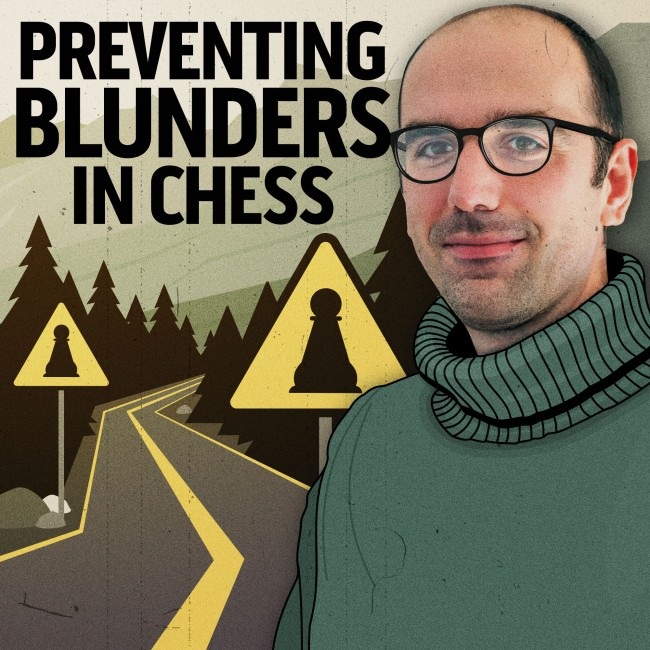
It has happened to me far too often. It’s hilarious to think that I once blundered against Can Kabadayi, the award-winning author of this excellent training course (among other things, Chessable Author of the Year 2024). It was at a weekend tournament in Malmö in 2015. I blundered a bishop for no reason at all. If I remember correctly, it was a classic case of what the author calls “mobility restrictions.”
With the knowledge I have now, that was easy to prevent. The point of this training is to avoid such big and unnecessary mistakes. We can do this well if we teach ourselves to perform a short blunder check every time we’re about to move. This Chessable course teaches you how that works.
What Is a Blunder?
The author defines a blunder as a move that changes the position in such a way that it creates a winning tactical opportunity for your opponent. This differs from simply overlooking an existing tactical threat from the opponent. It’s about your move actively worsening the position. There is an important distinction between two processes:
- Overlooking a threat – Not seeing an opponent’s move that creates a tactical problem for you.
- Blundering – Your move changes the position in a way that gives your opponent a decisive tactical chance.
The key is to adapt your own way of thinking. Be alert and carefully consider the opportunities your opponent gets when you play a move. This is something you need to master. A great idea is to regularly (daily) solve a number of puzzles and always ask yourself:
“What changes in a position after my move?”
The checklist designed by the author is an extremely useful tool for this.
CLAMP
This training is centered around the “CLAMP concept.” CLAMP is an acronym for:
- Checks
- Loose pieces and loose squares (unprotected or insufficiently defended pieces and squares)
- Alignment (see the explanation below).
- Mobility restrictions (restrictions on the mobility of pieces)
- Passed Pawns
The term “alignment” deserves further explanation. Alignments occur when pieces are on the same rank, file, or diagonal (pins). However, it can also refer to situations where the attacked pieces are within the range of a knight (knight fork) or a pawn. The author explains this theme very well. With every puzzle, he refers back to it and identifies the cause of a blunder.
Many Useful Exercises
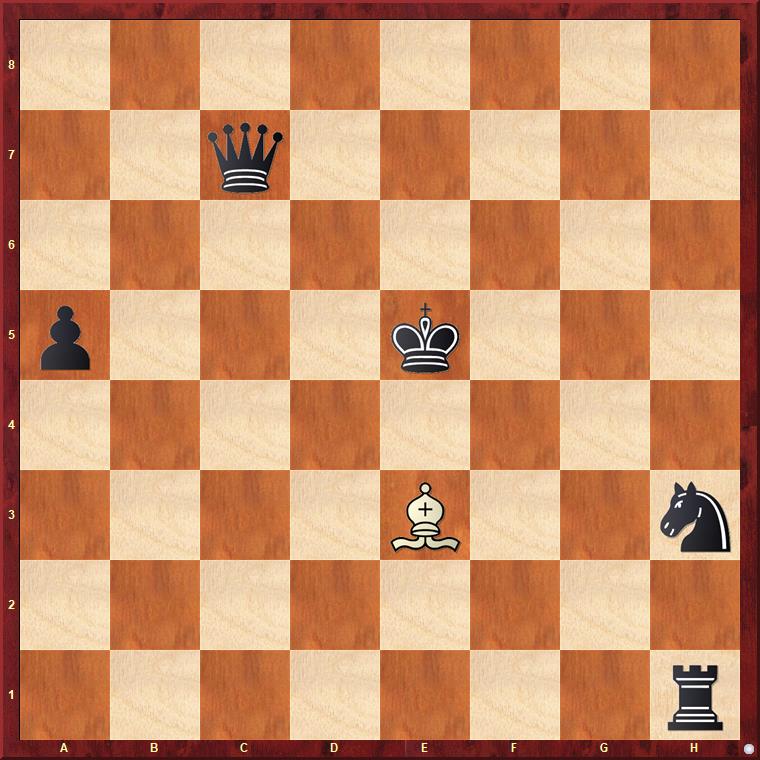
After the usual introduction, the author quickly gets the student to work. It starts with a series of interesting puzzles. The goal is to move a single piece multiple times to deliver a check. This is a particularly fun exercise for training ‘board vision.’ For example, consider the unconventional position below. Your task is to move the bishop and deliver a check in a maximum of four moves. Take care: avoid capture by the black pieces!
Click here for the answer
Answer: Bh6-f8-a3-b2
This specific exercise is certainly not the most difficult in the series. I generally did quite well, but I did make a few slips. Following this, the author discusses each component of the CLAMP formula separately, using a variety of puzzles. The training progresses with puzzles at four different levels. It begins quite easily, but the puzzles become progressively more challenging with each step. Initially, I made almost no mistakes, but at levels 3 and 4, I stumbled a few times. I’ll provide an example from each level.
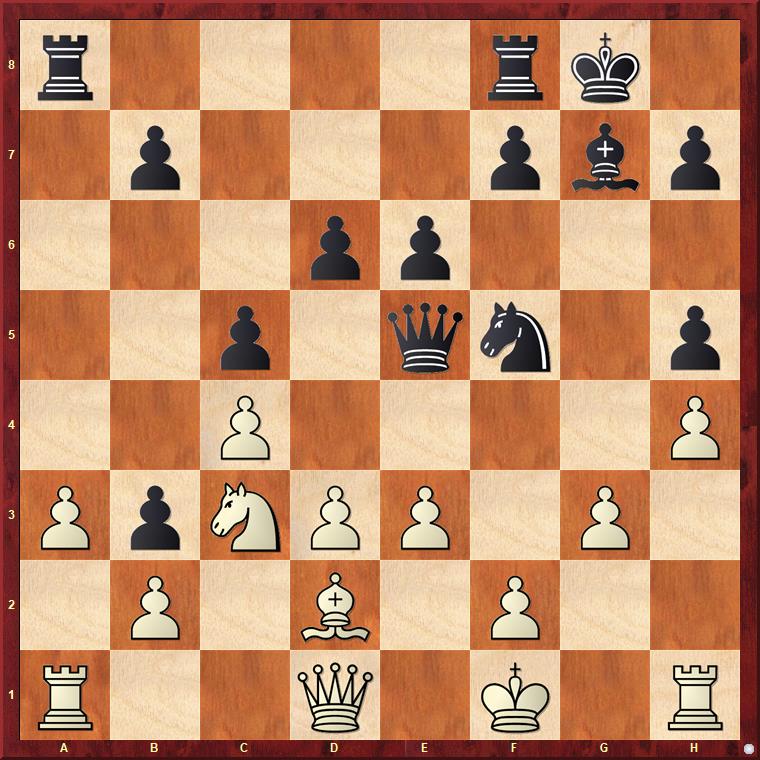
Level 1: which pawn can white savely capture: b3 or h5?
Click here for the answer
This was easy. 1. Qxb3 is correct. The pawn on h5 is poisened. Qxh5 is a blunder because of Nxg3+ (a typical case of alignment).
Level 2: is it save for white to capture the pawn on b4?

Click here for the answer
Yes that’s fine! Of course you should have calculated a bit. 1. Bxb4 Qb6+ 2. c5! the bishop is save because of the rook on d4. Of course not 1. Bb2 because after 1. … a5 black is much better.
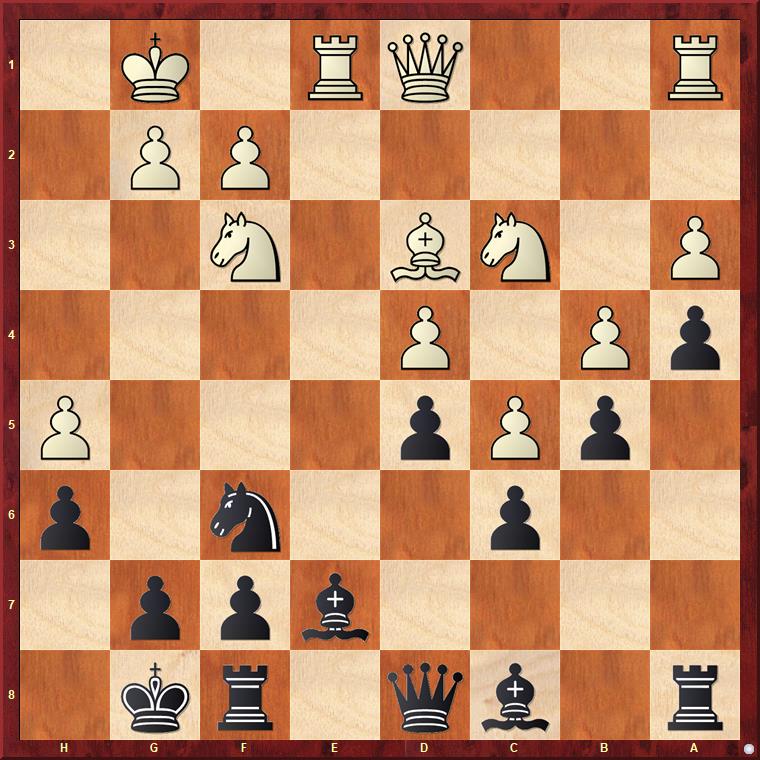
Level 3: choose with black between …Bg4 and …Nxh5
Click here for the answer
17… Bg4! This is the only move that keeps Black in the game. Black develops their bishop and prevents Ne5. However 17… Nxh5?? is a blunder. The knight on h5 is unprotected and allows 18. Ne5, which also attacks the pawn on c6.”
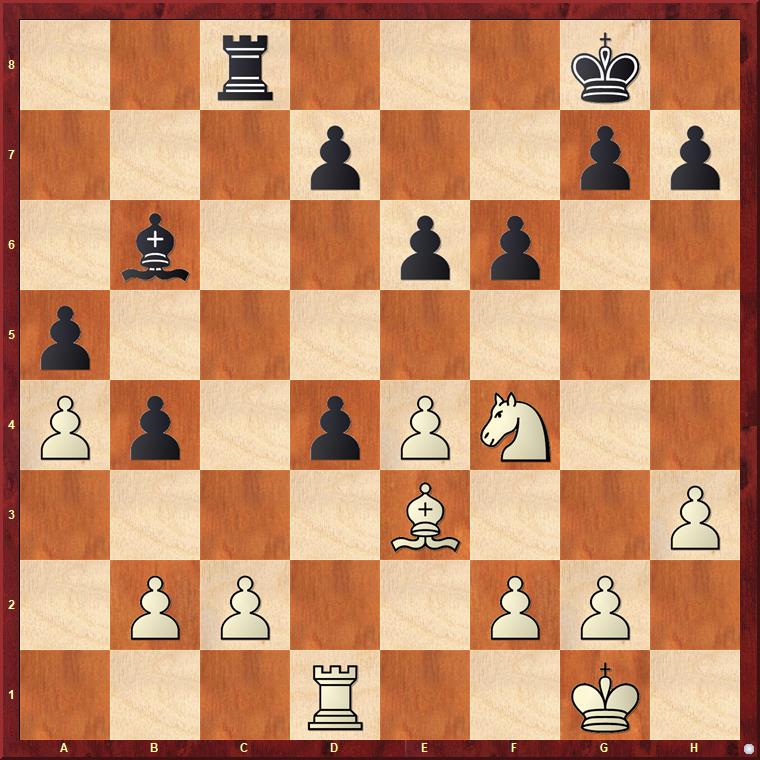
Level 4: Is it save to take the pawn on d4?
Click here for the answer
At first glance, it seems that White can’t take the pawn on d4 because of the fork that’s in the position. But it’s still possible! 1. Bxd4! Bxd4 2. Rxd4 e5 3. Nd5! exd4 4. Ne7+ Kf7 5. Nxc8 +-.
Being and staying alert
When you look at easy problems, most blunders, in hindsight, aren’t on a world-class level. If only we had paid more attention. That’s what it all comes down to: being and staying alert.
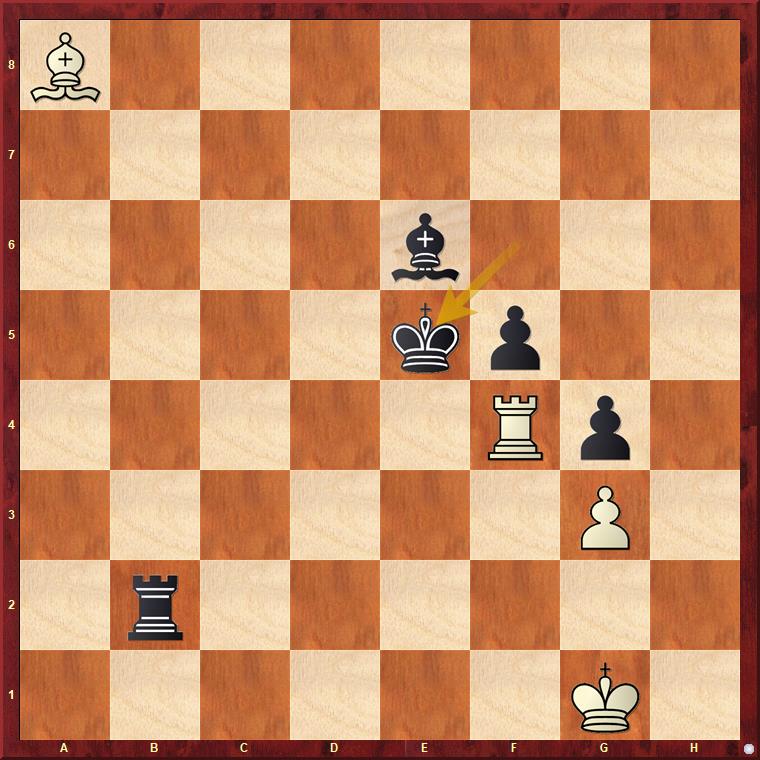
It doesn’t just happen to average club players; even grandmasters aren’t immune to blunders. We saw this not too long ago at the end of the World Championship match between Ding Liren and Gukesh. In the position below, Ding Liren played the incomprehensible 55. Rf2?? It took me not more than a couple of seconds to see that this was an incredibly big mistake. But of course, that was easy for me because I didn’t feel any pressure and was looking at the game with an unbiased view.
Click here for the answer
Black simplifies into an easily won endgame with 55…Rxf2 56. Kxf2 Bd5 57. Bxd5 Kxd5 58. Ke3 Ke5 and White resigned.
Excellent explanation and analysis.
Can Kabadayi explains in an excellent way what’s happening in every position. He provides complete analyses for the positions, which accurately shows what’s going on (note: I’ve kept my answers to the questions in the exercises very short). Overall, I did well with the exercises, but when I looked at the detailed analyses, I realized I had missed several moves. It forced me to confront the fact that I need to analyze positions much better. Superficiality encourages blunders.
In short: for me, it was an extra lesson to analyze positions much better. Because you might get the exercises right, but if you still overlook various details, it can be fatal in a real game and the point will go to the opponent. You can probably sense it: I’m far from done with this. It requires a lot of practice to unlearn bad habits. I wholeheartedly agree with the following text from the course description:
“This course is the perfect choice for anyone looking for a structured way to improve the safety of their moves. With Can’s method, you will make far fewer of those costly mistakes that don’t reflect your true playing strength.”
I had to chuckle at that last part of the text. Don’t we all think we’re much better chess players than our rating indicates? You can find all the information about this excellent training here…
 Michel's Chess Blog