Distractions

Chess can be a very complicated game. This is no news. And sometimes we over complicate things without knowing it. We get distracted and don’t see what’s the leading motif in a position.

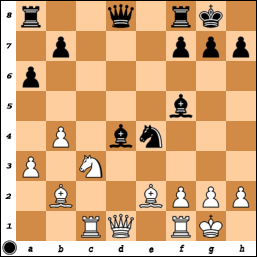
See the diagram. It is black’s turn. The position is quite messy. There are a lot of possibilities. Do you see the correct solution?

I found this problem on Chess Tempo (number 738). It’s from a game between Franz Jittenmeier and Ludger Grewe (2234) played in 1998. Black found the correct solution and won.

I want to sacrifice something, but what?

Chess puzzles can sometimes be…? Well eh, very puzzling.

The problem with these puzzles is that it is always something like ‘white to play and win’.

And winning most of the time means: you have to throw some material at your opponents mercy, preferably a queen or at least a rook.

Sorry, I was just joking. It doesn’t have to be the queen or a rook of course. Any piece or even pawn will do. As long as it is a sacrifice. The idea is clear:

A sacrifice seems to be the logic consequence of the statement ‘white (or black) to play and win’. Or is it?Read More »

Bad evaluation leads to a comedy of errors

Is solving tactical puzzles the road to success in chess? Some people are inclined to say:

‘Yes of course. On club level almost all games are decided by tactical errors!’

So we need not bother about strategy? Or trying to evaluate postions in the correct way?

Well the answer is obvious: of course not! The correct evaluation of a position is mostly the deciding factor in chess. The majority of the positions do not contain any tactics and you do not need the calculate very deeply. Chess is al about thinking of the correct plans. To do this in the proper way, you need to evaluate positions correctly. Bad evaluations lead to bad plans. And in my case: lead to disaster.Read More »

Chess puzzle #23: tricky little move

http://www.viewchess.com/cbreader/2015/6/6/Game17430015.html

See the diagram on the right. What do you think: who is better?

The answer seems quite obvious. Although the pawn structures are almost identical, black has the active pieces. You might also say ‘the white king is missing his natural defender’ (a knight on f3).

But black’s advantage seems short lived. White is ready to exchange these active pieces and then the combatants can bring their game to a peaceful end and go to the bar. Or is there a way for black to exploit his advantage?

Here you will find the solution to this chess puzzle…

Endgame magic

You don’t hear anything new when I tell you that Magnus Carlsen is a fantastic endgame player. He has a habit of winning his games from drawn or slightly better positions.

The diagram position is from his game with white against Shirov. Shirov is well known for his fantastic attacking style. But in this position it’s is clear he has to defend.

Maybe that was not his cup of tea? Shirov played 1. – Bg7? This is a mistake. He could have held the draw with 1. – Bb8 according to Krasenkow in Chessbase Magazine 125.

The question is: how did Magnus win? Solution…

With thanks to Dr. Karsten Müller – DVD Chess Endgames 14 – The Golden Guidlines of Endgame Play

Chess puzzle #28: the devil is in the detail

See the diagram on the right. White has serious problems. His bishop on f4 is attacked by the knight and with it the pawn on e5. To make matters worse, black has a well supported passed pawn on d4. So what to do?

White decided in favor of drastic measures and played 1. Be3. His idea is: if you take my pawn on e5, I will retaliate with the capture on d4. If this exchange would materialize, it is a certain draw.

The problem is: white overlooked a tiny detail. Do you see this ‘detail’?

Chess puzzle #27: blind spot

Does it ever happen to you? You study a position. It seems quite simple. But for some kind of silly reason you can’t find the correct sequence of moves.

It happened to me. See the diagram. It took me quite some time. I tried everything. At least so I thought. But couldn’t come up with a convincing solution because I missed a move in one variation. So in the end I failed. For sure you can do better than me! White to play and win.

I found this position on Chess Tempo…

#3 What is the threat? Dangling pieces

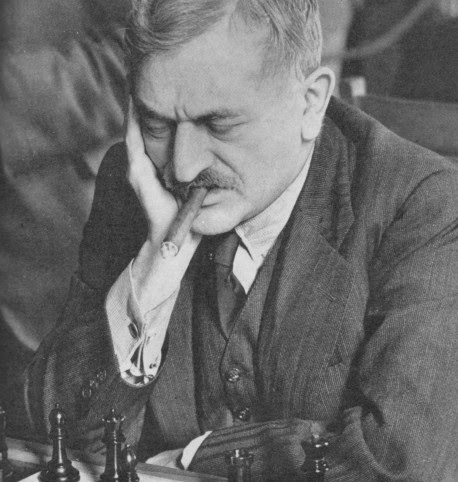
Emanuel LaskerNowadays the talk is all about the youngsters in chess. The young generation rules the chess world. Therefore it is hard to imagine that somebody who is over sixty is able to compete with opponents who could have been his grand children.

It is what Emanuel Lasker did when he was well into his sixties. He was 67 when he played the newly crowned world champion Max Euwe in the Nottingham tournament of 1936. Lasker was more than thirty years older than Max Euwe.

In his encounters with Lasker Euwe had a bad track record. They played three games and Euwe lost them all. Okay, they played one more game against each other. In fact Lasker lost in a simul from the nineteen year old Max (1920). But that doesn’t count.

Lasker had a positive score against almost all the great players of his time. Just to mention a few:Read More »

The Baden Baden chess tournament

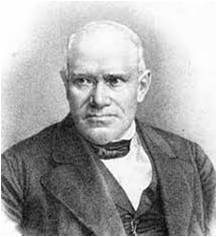
Adolf AnderssenIf you are vaguely aware of the chess history you might wonder: ‘Baden Baden’ where did I hear this name before? Well the Grenke Chess Classic is not the first chess tournament held in this spa town. 

In fact the first super tournament in the history of chess was held in this picturesque town.

The 1870 chess tournament was stronger than previous tournaments in London (1851 and 1862) and Paris (1867).

Compared to these earlier tournaments some rules were changed. First chess clocks were introduced. The players had to make 20 moves per hour. Before draws did not count. Games had to be played all over again. Now draws counted as half a point. And only top international players were invited. These are their names:Read More »